Gods in fantasy romance range from Greek myth retellings to Norse pantheons to entirely invented divine hierarchies. The best ones don't just name-drop Zeus. They make the divine feel like a weight, a curse, or a love interest who has watched civilizations rise and fall and still can't figure out one human.
We picked these because each one does something specific with mythology. Some stay faithful to the source material. Some blow it up and rebuild it in a nightclub. Some invent their own pantheons from scratch. The common thread: the gods aren't decoration. They're load-bearing.
2,100+ romantasy and fantasy romance books tagged by trope. Filter by spice, genre, and series length. Stack tropes to find exactly what you're craving.
Start HuntingCirce by Madeline Miller
The daughter of Helios, exiled to an island, building a life from nothing. The gods here are cruel and petty and entirely convinced of their own importance. Mythological events weave through her story (Odysseus, Daedalus, Medea), but they're filtered through Circe's growing refusal to be small. Miller writes the divine as a family system where power is the only currency, and Circe's transformation happens because she stops trying to earn it and starts creating her own. The feminism isn't heavy-handed. It's structural.

The Song of Achilles by Madeline Miller
Patroclus and Achilles. You know how this ends. You'll read it anyway and you'll still be wrecked. Miller writes the love story as tender and specific, two boys growing up together on an island, and the war as horrible and indifferent. The gods interfere the way gods do: carelessly, treating human lives like game pieces. Thetis is terrifying not because she's powerful but because she's a mother who views her son's lover as a stain on his destiny. This book lives in your chest for weeks.
A Touch of Darkness by Scarlett St. Clair
Hades and Persephone in a modern setting. She's a journalism student. He runs a nightclub called Nevernight. The mythology is updated but the bones are intact: the pomegranate, the bargain, the underworld pulling her in. St. Clair leans into the possessiveness, and Hades watches Persephone with the intensity of someone who has existed for millennia and is seeing something new for the first time. Spicier than Miller, faster-paced, and the he-falls-first energy is strong. He's gone before she even decides she likes him.
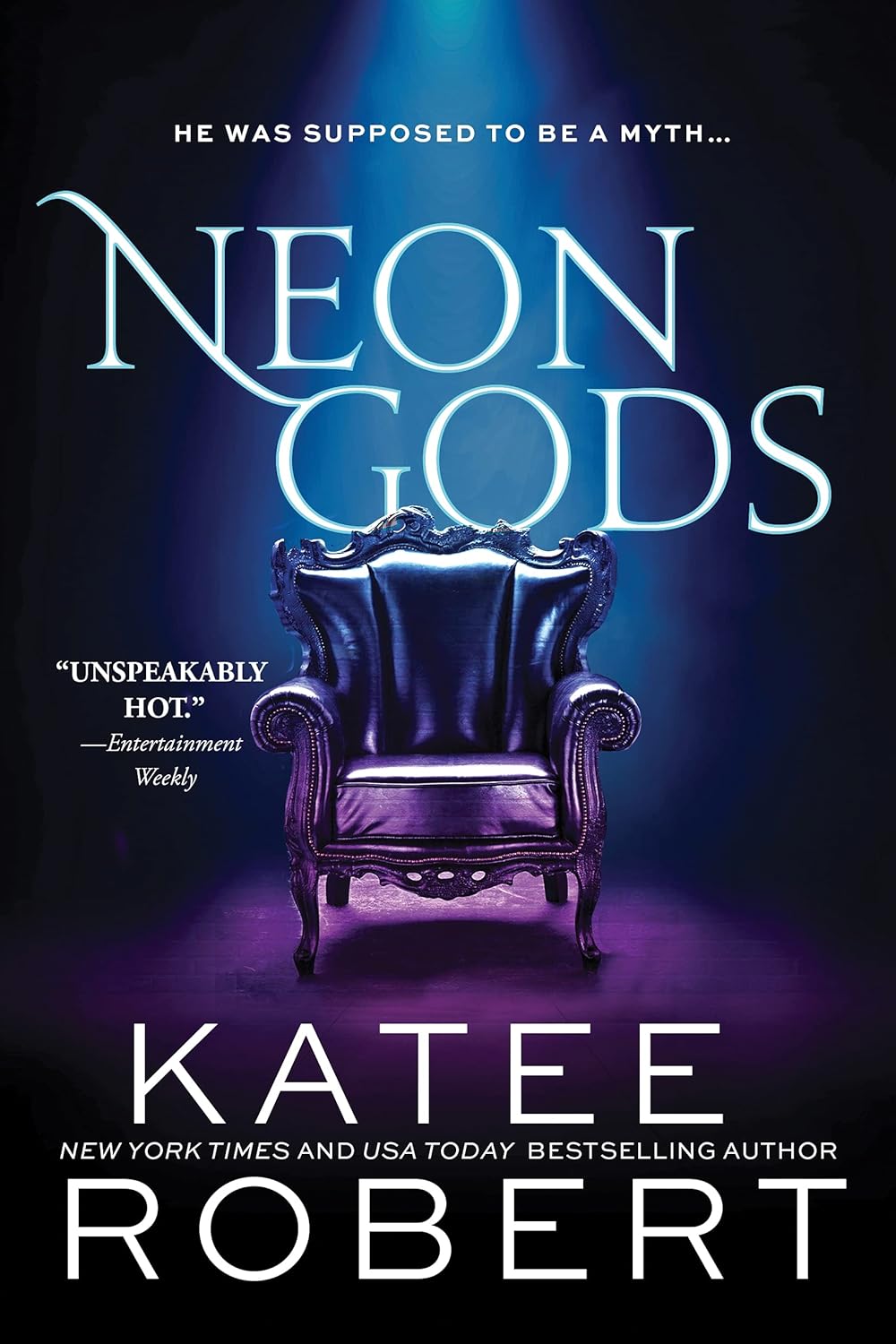
Neon Gods by Katee Robert
Persephone flees across the River Styx to escape a political marriage to Zeus. Hades is waiting on the other side. This is the explicit version and Robert does not hold back. The mythology works as a framework for a modern dark romance with power plays, genuine chemistry, and scenes that earn the Scorching tag. Olympus here is a city divided by the river, the Thirteen are political titles, and Hades is the one everyone thought was dead. If you want gods with your spice turned all the way up, this is where you start.
The Witch's Heart by Genevieve Gornichec
Angrboda, the witch burned three times by Odin, exiled to the Iron Wood, married to Loki. Norse mythology from the villain's wife's perspective. Gornichec writes the found family between Angrboda and her three monstrous children with devastating specificity, because you know Ragnarok is coming. You know what happens to Fenrir, to Jormungandr, to Hel. The mythology isn't backdrop. It's a countdown. Angrboda knows it too, and the tension between loving her family and knowing the prophecy can't be stopped gives the whole book a quiet, persistent ache.
The Hundred Thousand Kingdoms by N.K. Jemisin
Yeine arrives at the court of Sky and finds enslaved gods being wielded as weapons by the ruling family. Nahadoth, the god of darkness, is terrifying and beautiful and shifts form with the night. The power dynamic between a mortal woman and a captive god is unlike anything else on this list. Jemisin writes mythology that feels alien, ancient, and dangerous, not a retelling of existing myths but a whole cosmology built from scratch. The court politics are lethal, the theology is layered, and the romance is tangled up in questions about freedom and what worship costs the worshipped.
The Book of Azrael by Amber V. Nicole
Dianna is an ancient, powerful being with a death wish and a talent for violence. Liam is thousands of years old and equally lethal. The banter between them is sharp, relentless, and masks the fact that both of them are deeply damaged. Nicole builds an original mythology with its own gods, monsters, and creation story, and the slow burn between two immortals who've both seen too much has a weight to it that younger characters can't replicate. They've had centuries to build their walls. The enemies-to-lovers arc has to dismantle all of them. Gets spicier as the series progresses.

Lore by Alexandra Bracken
Every seven years, nine Greek gods are made mortal and hunted through modern-day New York by the descendants of ancient heroes. Kill a god, take their power. Lore left that world after her family was murdered. The hunt doesn't care that she left. Bracken embeds the mythology in the modern city in a way that feels lived-in: gods bleeding in subway stations, ancient rivalries playing out in Manhattan warehouses. The action is brutal, the stakes are immediate, and the found family Lore builds while trying to survive the week is earned through blood and loyalty, not sentiment.

Pestilence by Laura Thalassa
The Four Horsemen of the Apocalypse ride. Pestilence is spreading plague across Canada. A firefighter named Sara tries to kill him with an axe. She fails. He makes her travel with him as punishment. The enemies-to-lovers arc here is between a woman and the literal embodiment of plague, and Thalassa commits to the premise completely. Pestilence is learning what it means to care about a single human while destroying thousands, and the moral horror of that contradiction is what makes the romance compelling instead of absurd. He falls first, and it wrecks his entire purpose.
Ariadne by Jennifer Saint
The myth of the Minotaur told from Ariadne and Phaedra's perspective. The thread, the labyrinth, Theseus, Dionysus. Saint writes the betrayals that come from both the men and the gods, and both sisters navigate a world where divine attention is a curse wearing the mask of a gift. Quieter than Miller, more focused on the specific cruelty of being a woman in a story that was never written for you. Ariadne gives Theseus the thread that saves him, and what he does with that gift is the hinge the whole book turns on.
Tell us what you love and what you avoid. Every book gets scored: how much of what you love is in it, and whether anything you avoid is hiding inside.
Create My Profile