Forbidden love works when the WHY is specific. "They shouldn't be together" is not a trope, it's a premise. The question that makes it land is: what happens if they get caught? Species barriers where one side literally eats the other. Political alliances where falling for the wrong person is treason. Class divides where the penalty is death or exile. Mentor-student dynamics where trust is the weapon. The stakes have to be concrete. If the only consequence of discovery is mild social disapproval, the forbidden element is decoration.
We picked these books because the forbidden element is load-bearing. Remove the barrier and the story collapses. These aren't romances that happen to be inconvenient. They're romances where the characters have every reason to walk away, understand exactly what they're risking, and choose each other anyway. That's the difference between forbidden love as a flavor and forbidden love as the entire structural engine.
2,100+ romance books tagged by trope. Filter by spice, genre, and series length. Stack tropes to find exactly what you're craving.
Start Hunting
Daughter of Smoke & Bone by Laini Taylor
Karou is an art student in Prague who collects teeth for the monsters who raised her. She has blue hair, a sketchbook full of impossible things, and no idea what she actually is. Then she meets Akiva, a seraph, and seraphs are the enemy. Not metaphorically. Her people and his people are in an active, centuries-long war of extermination. The cross-species forbidden here is absolute: chimaera and angels don't fall in love, they kill each other on sight.
Then the reincarnation reveal hits, and the forbidden element doubles. It wasn't just that they shouldn't, it's that they already did, in another life, and it ended in fire. Taylor's prose is lush, sometimes to a fault (the second book sags in the middle), but the romance architecture is airtight. Two people on opposite sides of a war, drawn together by something older than the conflict itself, knowing full well what it will cost. The "they were never supposed to happen" is baked into the worldbuilding at every level.
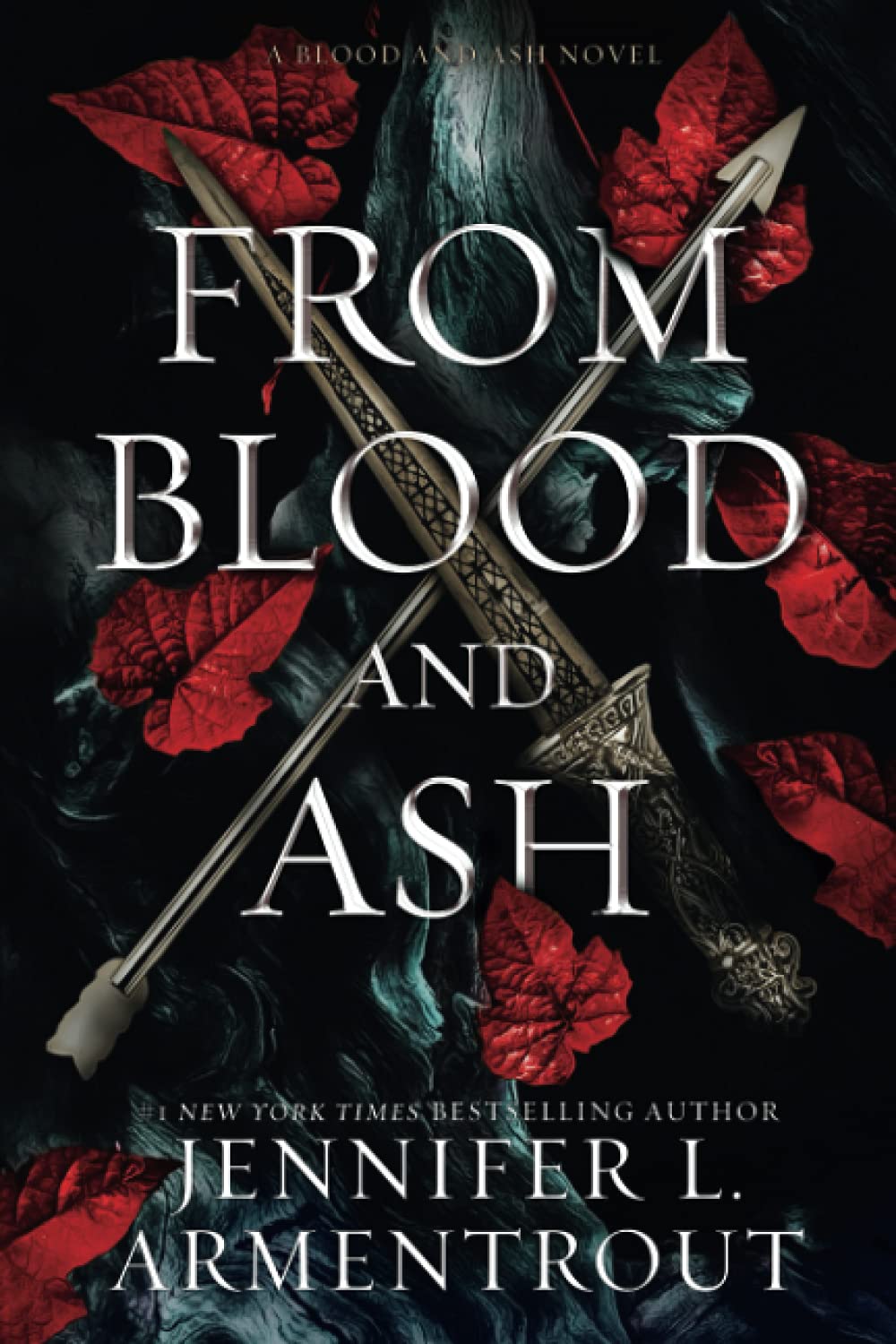
From Blood and Ash by Jennifer L. Armentrout
Poppy is the Maiden. She is not to be touched, seen, spoken to, or thought about with any feeling warmer than dutiful reverence. Hawke is her new guard. The forbidden element here is literal and enforced by an entire religious institution: physical contact with the Maiden is a punishable offense. So naturally, every interaction between them crackles with the specific electricity of "we are doing something that could get us both killed."
And then the mid-book reveal reframes the ENTIRE relationship. Everything Hawke was, everything he said, every stolen moment, all of it shifts meaning. The forbidden reconfigures from "he shouldn't touch the Maiden" to something much bigger and much worse. Armentrout plays this twist well. The book is long, the spice is significant, and the pacing in the first act could be tighter. But the forbidden architecture, where the barrier isn't just social but structural to the entire plot, carries it.
Crier's War by Nina Varela
Crier is an Automa, one of the ruling class of constructed beings. Ayla is a human servant whose family was killed by Automa. She's plotting to assassinate Crier. F/F romance across species lines in a world where one species literally owns the other. The class divide isn't subtext, it's the entire political structure of the world. A human and an Automa together is not just forbidden, it's incomprehensible to both their societies.
The slow burn here is excruciating in the best way. Ayla has every reason to hate Crier and she DOES, which makes the moments where she starts noticing Crier's vulnerability feel like betrayals of her own mission. Crier, meanwhile, was never taught that humans have inner lives worth considering, so her growing fascination with Ayla reads like someone discovering a new category of thought. Closed door, so the tension stays in the looks, the silences, the near-touches. If you want forbidden love where the barrier is systemic oppression and both characters have to dismantle their entire worldview to reach each other, this is it.

Serpent and Dove by Shelby Mahurin
Lou is a witch hiding in plain sight in a city that hunts and burns witches. Reid is the church's best witch hunter. They end up married through a series of circumstances that forces them together while she hides literally the one thing about herself that would make him kill her. The forbidden element runs the entire first book as dramatic irony: we know what she is, he doesn't, and every intimate moment carries the weight of "if he finds out, this ends in violence."
The French-inspired setting is a nice touch, and Mahurin commits to the bit. Lou is sharp, funny, and operates from a place of genuine survival instinct, not recklessness. Reid is rigid and devout and completely undone by a woman who breaks every rule he was raised to enforce. The arranged marriage gives them proximity; the secret gives the proximity teeth. Some readers find the middle section slow, and Reid's rigidity can read as density rather than conviction, but the central tension of "I love the person I'm supposed to destroy" is built to last.

Girls of Paper and Fire by Natasha Ngan
Lei is taken from her home to serve as one of the Demon King's Paper Girls. The role is exactly what it sounds like. She falls for Wren, another Paper Girl, in secret. F/F. The forbidden element here isn't romantic disapproval, it's survival: if the Demon King discovers they're together, they die. The stakes are immediate, physical, and constant.
Content warnings apply for the premise, and Ngan doesn't soften what the Paper Girls endure. The romance between Lei and Wren grows in stolen moments, whispered conversations, training sessions that become something else. Wren carries secrets of her own that add another layer to the forbidden. This is not a light read. The world is beautiful (Malaysian and East Asian inspired) and brutal in equal measure. But the forbidden love at the center feels earned precisely because of what it costs. When characters risk death to hold someone's hand, you believe them.
The Jasmine Throne by Tasha Suri
Malini is a captive princess, imprisoned by her brother the emperor. Priya is a maidservant in the temple where Malini is held, hiding magic that could get her killed. F/F. The forbidden layers stack: class (princess and servant), politics (Malini's freedom depends on alliances Priya's existence threatens), and magic (the rot spreading through the land is connected to what Priya is). Neither woman can afford the distraction. Both women are playing longer games than the romance.
Suri's Indian-inspired worldbuilding is dense and committed. This is not a romance novel with fantasy elements. It's an epic fantasy where the romance is one thread in a larger tapestry of rebellion, empire, and decaying magic. Some readers want more romance page time, and that's fair criticism. But the forbidden element works precisely because neither character has the luxury of prioritizing their feelings. They're trying to survive a collapsing empire. Falling for each other is a complication neither planned for, and the political cost of being caught together is catastrophic for both their separate causes.
Angelfall by Susan Ee
Angels have destroyed civilization. Penryn is a teenage girl trying to keep her family alive in the wreckage. She finds Raffe, an angel with clipped wings, and they form an uneasy alliance because they each have something the other needs. He's a member of the species that ended her world. She's the kind of creature his people consider vermin. The forbidden isn't romantic convention, it's survival logic: humans and angels do not help each other. Full stop.
Ee writes this lean. The book is short, fast, and doesn't waste pages on angst that hasn't been earned. Penryn is pragmatic in a way that feels realistic rather than cold. She needs Raffe alive because he's useful, and the shift from "useful" to "necessary" to something she won't name happens in small, almost invisible increments. The closed-door treatment works here because the tension lives in proximity and trust, not physical escalation. When you can't afford to sleep near someone because they might kill you, choosing to sleep near them anyway IS the intimacy. The series escalates well, though books two and three get darker than the first.
The Bone Season by Samantha Shannon
Paige is a dreamwalker, a clairvoyant in a future London where clairvoyance is criminal. She's captured and taken to a penal colony run by the Rephaim, an ancient non-human race that feeds on human aura. The Warden becomes her keeper. He's not human. He owns her, legally. The power imbalance is the forbidden element, and Shannon doesn't pretend it away.
This is a slow burn across SEVEN books, and the captor-captive dynamic is deliberately uncomfortable in book one. Shannon earns it by making the Warden's motivations completely opaque for a long time. Paige doesn't trust him, and the narrative doesn't ask you to either. The romance emerges through small acts of defiance against the system they're both trapped in, not through grand gestures. The forbidden element isn't just "human and Rephaite shouldn't be together." It's that the entire structure of their world is designed to make genuine connection between their species impossible. For readers who want the long game, where the payoff compounds across a series, this slow burn does not blink. For readers who want resolution by page 300, this will test your patience.

Heartless by Marissa Meyer
This is the origin story of the Queen of Hearts from Alice in Wonderland. Catherine wants to open a bakery. The King of Hearts wants to marry her. She falls for Jest, the court joker, instead. A nobleman's daughter and a court entertainer. The class difference alone makes it forbidden, but the real weight comes from something else: you already know how this story ends.
Meyer uses that foreknowledge as a structural weapon. Every sweet moment between Catherine and Jest carries dread because we know she becomes the Queen of Hearts, which means this love story doesn't survive. The Wonderland setting is whimsical and unnerving in equal measure, and Meyer's version of it is more Tim Burton than Disney. The forbidden element is layered: society says she should marry the King, her heart says otherwise, and fate says it doesn't matter what either of them wants. Closed door, but the emotional devastation more than compensates. This one will make you angry in a way that means it worked.
Starcrossed by Josephine Angelini
Helen discovers she's a demigod. Lucas belongs to the rival family she's fated to destroy. The setup is Romeo and Juliet with Greek mythology grafted onto modern Massachusetts, and Angelini commits to the mythological stakes: the Furies literally activate when Helen and Lucas are near each other, driving them toward violence instead of love. "We cannot be together or the world ends" is about as forbidden as it gets.
The Trojan War echoes through the family dynamics, and the forbidden element compounds as the series reveals more about what Helen and Lucas actually are to each other in the mythological framework. The first book is YA in tone and pacing, which means the romance progresses through longing looks and almost-touches rather than anything physical. That restraint works for the forbidden setup because the barrier isn't just social, it's cosmic. The mythology gets complex across three books, and some of the reveals in book two reframe the forbidden element in ways that either deepen or frustrate depending on your tolerance for "actually, the reason you can't be together is even WORSE than you thought." If you're in for the mythology, it pays off. If you're in purely for the romance, prepare for the gods to keep interfering.
Tell us what you love and what you avoid. Every book gets scored: how much of what you love is in it, and whether anything you avoid is hiding inside.
Create My Profile